
Ashes Global Event - not Pet Project
Proteas miss Klaasen, should never have 'walked'.
Tis the season to jolly, not huffy, so let’s get things off our chest so we can concentrate on the merriment which is demanded from us during the holiday season.
The Ashes have been studiously avoided in this column. There are a thousand alternative, better places to read the analysis of experts and absorb the vitriol of furious amateurs.
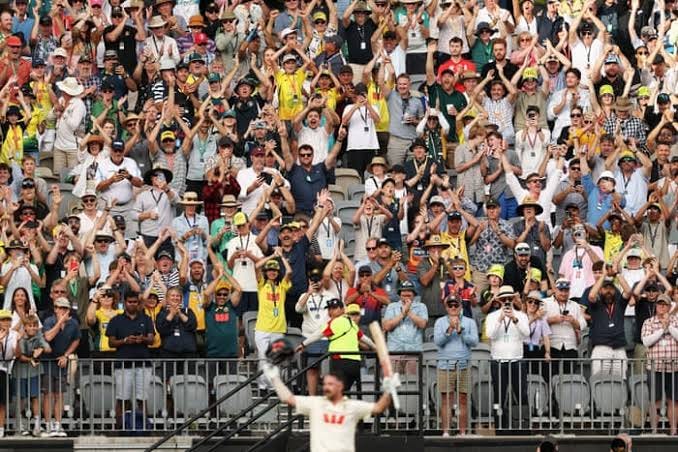
England and Australia are obsessed with the contest but the truth is, it’s a global cricket event. The players and supporters from the combatant nations can pretend it matters only to them but it’s also a showcase for Test cricket around the world. Or should be.
Only Europeans and Americans can play in the Ryder Cup but that doesn’t mean it isn’t big in Japan – and everywhere else golf is played. If the 12 good men of Europe arrived at Adare Manor in County Limerick for the 2027 event two days before it starts and played a single practise round amongst themselves eyebrows would be raised.
If the team strategy was to take driver on every par-four and forget about the fripperies of lag-putts on the greens there would be outrage. Golf, as the England cricketers know all too well, is full of nuances and subtleties requiring different strategies according to conditions and the match situation.
There was a huge amount to commend and endorse Brendan McCullum’s determination to re-examine the way England had been playing Test cricket in the light of a single victory in 17 matches before he took over. There were some stunning successes, too.
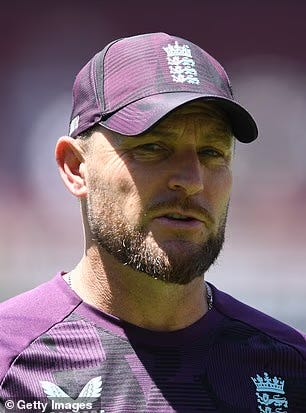
The long-term goal was set for Australia where England hadn’t won a single Test in three successive campaigns. By freeing the players from their fear of failure and tackling head-on the often cloying austerity of the game, McCullum ‘suddenly’ ignited the genius of Jonny Bairstow and Harry Brook, amongst others. On the flat pitches of England and Pakistan.
Playing music during net sessions, making fielding drills ‘fun’ and having plenty of downtime between training sessions which focussed on intensity rather than endurance were all popular moves and produced short-term success – against everyone except India and Australia.
Just because the greatest format has been played largely the same way for a century doesn’t mean it has to continue being played that way. But there will always be a time to attack and to defend, with bat and ball. Being better at identifying those moments needed as much attention as being bold enough to take them.

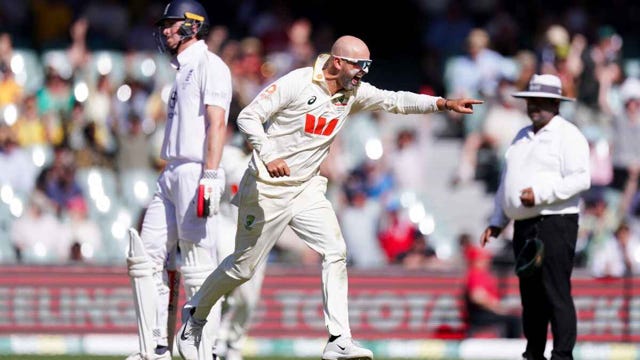
If Brook and Zak Crawley could have batted out the fourth day in Adelaide with low-risk cricket England might have required in the region of 220 runs with seven wickets remaining and, just maybe, the Australian attack could have wavered on the final day. Instead, Brook was bowled reverse-sweeping one of the most successful spinners of all time.
Cricket remains a very long way behind every other ‘ball sport’ in its use of statistical analysis. Most teams are attempting to rectify this shortcoming. McCullum informed the ECB shortly after the start of his tenure that his team would not be requiring the services of two ‘performance analysts’ because he wanted the players to trust their ‘instincts’. Mostly, those instincts were wretched and naieve and Test lovers everywhere had to endure another no-contest.
South Africa, meanwhile, were being given a lesson of their own by India in how to play T20 cricket. It was far easier to digest, not just because it was ‘only’ T20 cricket but because India were simply better than the Proteas in every department. And more dynamic.
It remains irksome, or worse, than Heinrich Klaasen walked away from international cricket in June. Just as AB de Villiers became disillusioned with his employers and the grind of largely irrelevant bilateral cricket, Klaasen opted for the exit. “To have played with the Proteas badge on my chest was and will always be the biggest honour in my career. I look forward to spending more time with my family as this decision will allow me to do so,” he said.
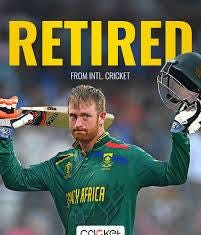
There are just a handful of players with strike rates above Klaasen’s 141.85 in 50+ international innings. Saudi Arabia’s Faisal Khan and Belgium’s Saber Zakhil are pretty high up (!) but so too are Tim David, Andre Russell, Suryakumar Yadav, Glenn Maxwell and Colin Munro.
Klaasen spoke to then white-ball coach, Rob Walter, about his waning enthusiasm and, between them, they mapped out a playing route until the 2027 World Cup. It included a limited number of bilateral series and allowed the batsman play as many as three franchise tournaments.
With the change of coach came Shukri Conrad’s assertion that the “best team would play all the time” and “if anyone wants to play for South Africa they must be available for every series.” That was before he permitted multiple rests and selected over 30 players – by which time Klaasen was gone.
CSA CEO, Haroon Lorgat, believed de Villiers should not be afforded ‘special treatment’ in 2018. Conrad believed the same about Klaasen. Special players often require ‘different’ treatment – but it takes ‘special’ people to see that. So, de Villiers and Klaasen left at 34, the peak of their powers.
I'm with you in this, Neil. I note in Australia that Mitchell Starc (among others) has been able to pick his preferred format. Great players should get extra consideration, given their ability to add quality when they play.
Although we do miss players like Klaasen and AB, I do think it's wrong when players, contracted to CSA only want to play in those tournaments that suit themselves. So I can understand perhaps why these players have not been chosen.
On a slightly, if I may, different note. Can someone tell me why it is necessary to select so many different players over the three formats? Surely any bowler worth anything should be able to adjust his line and length to whatever format he's playing in? I'd go along with maybe one or two maybe not meeting the requirements for one or other of the formats. But just how many different bowlers have been used over the past year or two? It is no longer any sign of merit or needing to be special to be awarded a Protea cap as they are now issued to just about anyone. Perhaps Niel, you'd like to ask your statistician, if you have one, to supply us with the number of different players that have been used across these formats with special attention being given to the bowlers? Surely, it is better to stick to those players that are identified as being the best and give them game time? Obviously, injuries and replacements for injured players must be taken into account. But it'is still ridiculous the amount of players that have been used.
My opinion and subject to be attacked for it. Ha ha.